What Makes a Tree Service Website Convert Visitors Into Customers
A tree service website should do one thing exceptionally well:
Turn visitors into paying customers.
Many tree company websites look professional. They have nice colors, modern layouts, and polished branding. Yet they fail at the most important objective — generating consistent phone calls.
The difference between a website that “exists” and one that consistently produces booked jobs comes down to strategy. Many companies work with tree service marketing experts to build websites designed specifically to generate consistent calls and booked jobs.
These are the elements that truly make a tree service website convert.
Speak to Intent Immediately
When homeowners search for terms like tree removal near me, emergency tree service, stump grinding cost, or an arborist in their city, they aren’t casually browsing — they’re actively looking for a solution. Their intent is urgent and specific, and your website needs to acknowledge that immediately. The messaging should quickly reassure them that they’re in the right place and that help is available now. When you speak directly to their needs from the first few lines, you build trust faster and increase the likelihood they’ll take action.
Make Contact the Easiest Action on the Page
Tree service is a call-driven industry. High-converting websites remove every obstacle between the visitor and the phone call.
Effective sites include:
- Click-to-call buttons on mobile
- Phone number visible in the header
- Sticky call bar while scrolling
- Clear call prompts after each section
- Short, simple contact forms
No visitor should have to search for your number. When the next step is obvious, more people take it.

Prioritize Trust Before Design
Homeowners are naturally cautious before hiring a tree company because the work can be expensive, risky, and often urgent. They want to feel confident that they’re choosing experienced professionals who can handle the job safely and responsibly. When a website focuses on building trust early—through clear credentials, real proof, and reassuring messaging—that hesitation begins to fade. Establishing credibility first makes it much easier for visitors to feel comfortable picking up the phone.
High-converting tree service websites prominently display:
- Proof of insurance
- Years in business
- Service area coverage
- Certifications
- Reviews
- Real job photos
Trust must be visible without scrolling. If reassurance is hidden, doubt increases.
Match Your Structure to How People Decide
Most tree service visitors follow a predictable decision path:
- Confirm service availability
- Check credibility
- Look at proof of work
- Decide whether to call
Your website should mirror that exact journey.
Optimize for Emergency Behavior
Many tree service searches happen in moments of stress and urgency. When a tree has fallen on a roof, storm damage needs immediate cleanup, or a tree is dangerously leaning, homeowners aren’t comparing multiple websites—they’re looking for fast, reliable help. Your website should reflect that urgency with clear emergency messaging, visible contact information, and reassurance that immediate assistance is available. When you align your content with this high-pressure behavior, you make it easier for visitors to act quickly and choose your service.
Simplify Navigation to Prevent Drop-Off
Complicated menus often overwhelm visitors and distract them from the main goal. When homeowners land on a contractor’s website, they want quick answers—not endless options to sort through. Keeping navigation simple with essential pages like About, Reviews, and Contact makes it easier for users to find what they need without frustration. Clear, streamlined navigation keeps attention focused on taking action instead of getting lost.
Mobile Experience Determines Call Volume
Most tree service traffic comes from smartphones.
If your mobile design is:
You are losing the majority of potential customers.
Mobile-first design is no longer optional — it’s required for conversions.
Why Some Tree Service Websites Fail to Convert
Low-performing sites often:
- Have no clear call-to-action
- Fail to highlight service areas
- Ignore mobile usability
- Use generic content
- Lack proof of credibility
- Look outdated
In many cases, traffic is not the problem.
Conversion structure is.
How Website Performance Impacts SEO
Website performance directly impacts SEO because search engines monitor how users interact with your site. Factors like time on page, bounce rate, mobile usability, site speed, and engagement help determine whether visitors find your content valuable and easy to navigate. When users stay longer and interact more, search engines reward the site with stronger rankings.
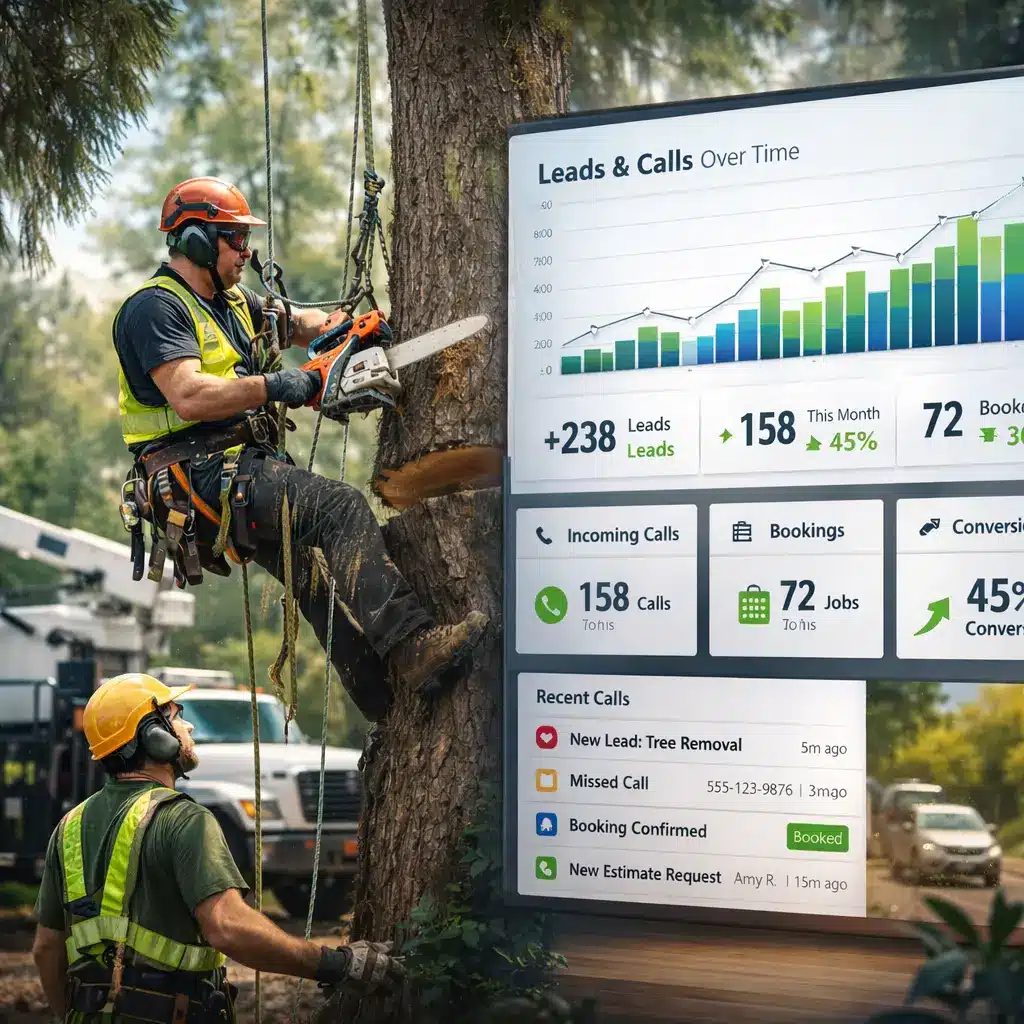
Higher rankings lead to increased traffic, and when your website is built to convert effectively, that traffic turns into real inquiries and booked jobs. This balance between visibility and conversion is what drives steady, sustainable growth.
Signs Your Website Is Costing You Customers
If these problems exist, investing in high-converting tree service website design can dramatically increase your call volume
- Mobile experience feels clunky
- Competitors outrank you
- Leads are inconsistent
- Site feels outdated
- Bounce rate is high
- Visitors come but don’t call
A strategic redesign focused on conversions often increases call volume — without increasing traffic.
Final Thought
What makes a tree service website convert visitors into customers isn’t flashy design — it’s clear messaging, easy-to-find contact options, strong trust signals, fast performance, mobile optimization, and a logical structure that guides homeowners toward calling. When your website aligns with how people actually make decisions, it becomes more than an online presence — it becomes a steady source of qualified leads and booked jobs.