Mobile Optimization for Tree Service Websites — Why It Matters

A tree service website has one primary responsibility:
Turn urgent searches into immediate phone calls.

Today, most of those searches happen on smartphones — not desktops. When a homeowner is dealing with storm damage or a hazardous tree, they’re not sitting at a computer comparing options. They’re holding their phone and looking for fast, dependable help.

If your website isn’t built for mobile performance, you’re losing opportunities before visitors even read your message.

Get Help From an Expert
FILL OUT THIS FORM OR CALL US AT
+1 850-280-9882
TO GET STARTED
Name

Mobile Traffic Is Not Secondary — It’s Primary

For tree service companies, mobile traffic often represents the majority of total visitors. That means your mobile experience isn’t just an add-on — it’s your main storefront.

If your mobile site feels slow, cluttered, or difficult to use, potential customers won’t struggle through it. They’ll simply tap the back button and call someone else.

Speed Directly Impacts Calls

Mobile users expect instant results. If your website takes too long to load, visitors assume your service may be just as slow.

A fast-loading site:

DALL·E 2025 03 20 12.23.36 A professional banner for a tree service website design company, featuring a modern website layout displayed on multiple devices (laptop, tablet, and

Make Calling Effortless

Tree service is a call-driven business, which means your website should make contacting you feel instant and effortless. The more steps a visitor has to take, the more likely they are to leave and call someone else.

A high-performing mobile site keeps the phone number clearly visible at the top, uses strong click-to-call buttons, and often includes a sticky call bar that follows users as they scroll. Short, simple contact forms also reduce hesitation and make reaching out feel easy. When visitors never have to search for your number, you remove friction and significantly increase the chances of turning traffic into booked jobs.

Design for Small Screens, Not Desktops

What works on a desktop doesn’t always work on a phone. Mobile-first design prioritizes clarity, simplicity, and ease of use on smaller screens. Text should be easy to read, headlines should be direct, sections should feel clean, and call-to-action buttons should stand out. On mobile, a streamlined layout with fewer distractions helps visitors focus and take action quickly.

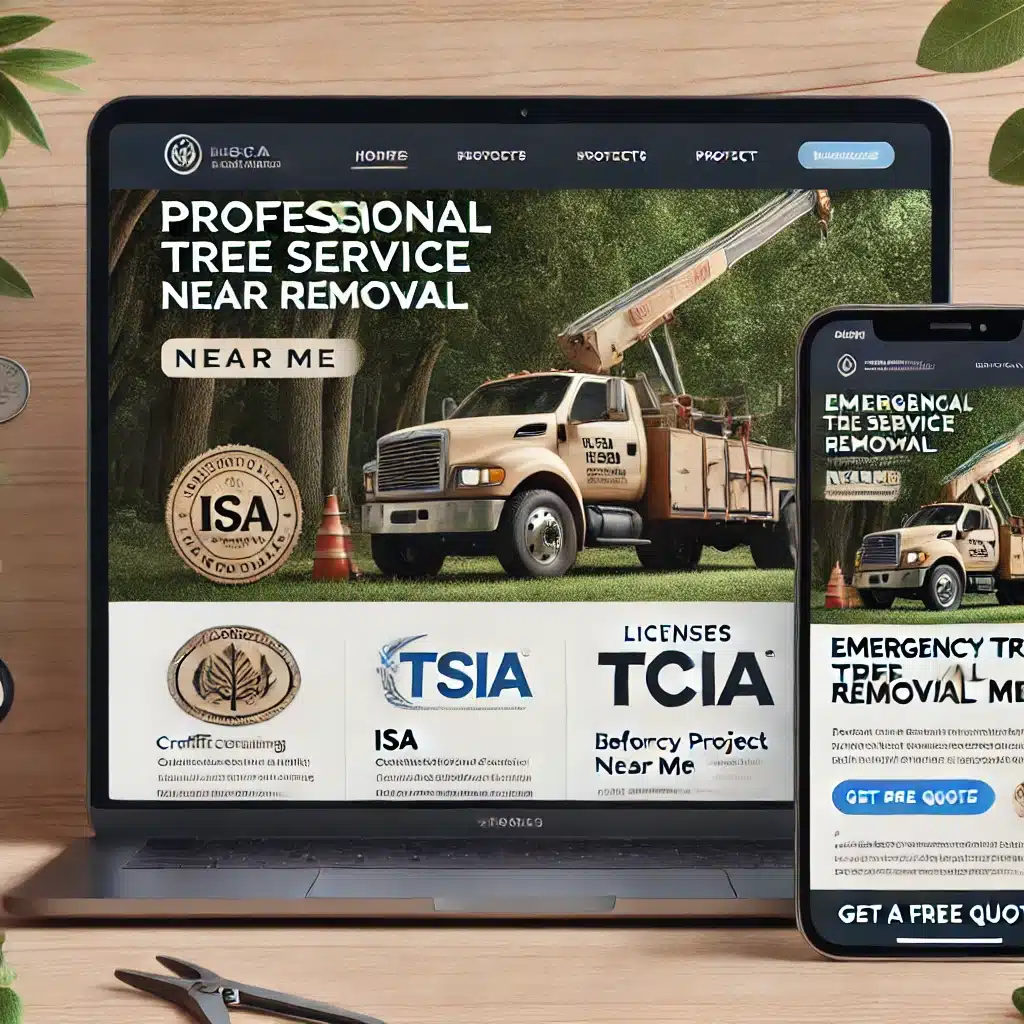
A professional tree service company website displayed on a mobile phone and a laptop screen. The website features trust-building elements such as certifications (ISA, TCIA), licenses, and a before/after project gallery. It highlights local SEO-optimized keywords like "emergency tree removal near me" and includes a prominent "Get a Free Quote" call-to-action button. The design is modern, mobile-friendly, and visually appealing.

Emergency Behavior Requires Immediate Reassurance

Many tree service searches happen during stressful situations. A fallen tree, roof damage, or a dangerous limb doesn’t leave room for browsing.

Your mobile site should immediately communicate:

When urgency is matched with clarity, calls increase.

Mobile Performance Influences SEO

Search engines give priority to websites that perform well on mobile devices. They evaluate loading speed, responsiveness, and how users interact with the site on smaller screens.

When your mobile experience is smooth and efficient, engagement increases, bounce rates decrease, and rankings improve — leading to more organic traffic and more potential leads.


Why Some Tree Service Sites Underperform

Many tree service websites struggle to convert because they overlook the mobile experience. Common issues include poor layout on smaller screens, hidden contact details, slow loading times on cellular networks, oversized images that hurt performance, and overly complex navigation. In most cases, the problem isn’t a lack of traffic — it’s a frustrating mobile experience that drives potential customers away.

Signs Your Mobile Site Needs Improvement

You may need upgrades if:

Visitors leave quickly on mobile
Calls don’t match traffic levels
Buttons are hard to tap
Text requires zooming

Small adjustments in structure and performance can significantly increase call volume — without increasing advertising spend.

Get Help From an Expert
FILL OUT THIS FORM OR CALL US AT
+1 850-280-9882
TO GET STARTED
Name

Contact Information Isn’t Visible

Many tree service websites underperform not because they lack traffic, but because they fail to deliver a smooth mobile experience. Slow load times, hidden contact information, cluttered layouts, and confusing navigation create unnecessary friction for visitors who are often searching in urgent situations. On a smartphone, even small usability issues can quickly drive potential customers away.

When a site doesn’t clearly highlight emergency availability, service areas, or make calling effortless, hesitation increases. In most cases, the real problem isn’t visibility — it’s a mobile experience that doesn’t align with how homeowners search and make decisions.

Slow Load Times Kill Urgent Leads

When someone searches for emergency tree service, speed matters. If your website takes too long to load on mobile data, visitors won’t wait. They’ll tap back and call the next company listed.

Common speed issues include:

Even a few seconds of delay can cost real jobs.

Final Thought

Mobile optimization isn’t optional for tree service companies — it’s foundational. When your site loads quickly, looks clean on smartphones, and makes calling effortless, it transforms casual visits into booked jobs.

A well-optimized mobile website doesn’t just “exist.” It works quietly in the background, capturing urgent searches and turning them into steady, predictable revenue.

Scroll to Top